Resilient Worlds at the 6G Resilience Summit
Exciting news from Helsinki! On Tuesday, three of our members gave talks at the 6G Resilience Summit: Prof. Falko Dressler (TU Berlin), Prof. Eduard Jorswieck (TU Braunschweig), and Prof. Aydin Sezgin (Ruhr University Bochum).
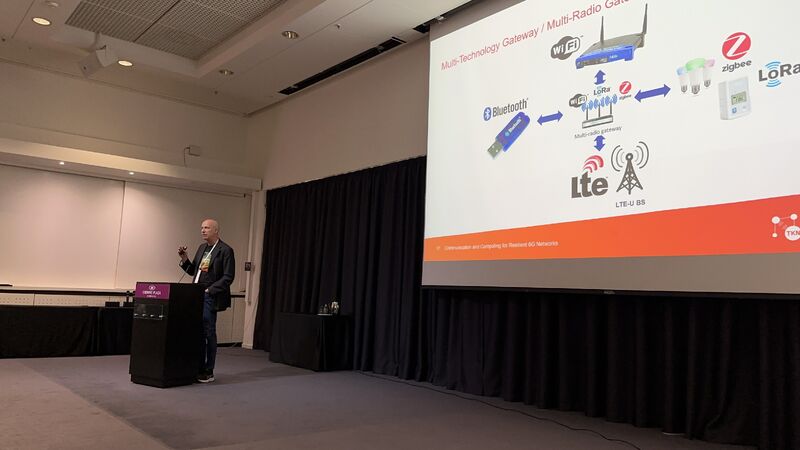
Prof. Dressler drew on lessons from past disasters and presented two complementary directions toward resilient next-generation networks. The first is virtual edge computing (V-Edge), which virtualizes and integrates all available resources across cloud, edge, and fog, including end-user devices. The second is cross-technology communication, where WiFi, ZigBee, Bluetooth, LTE, and LoRa collaborate instead of merely coexisting. Combined with network coding, it enables resilient, high-throughput, low-latency platforms.
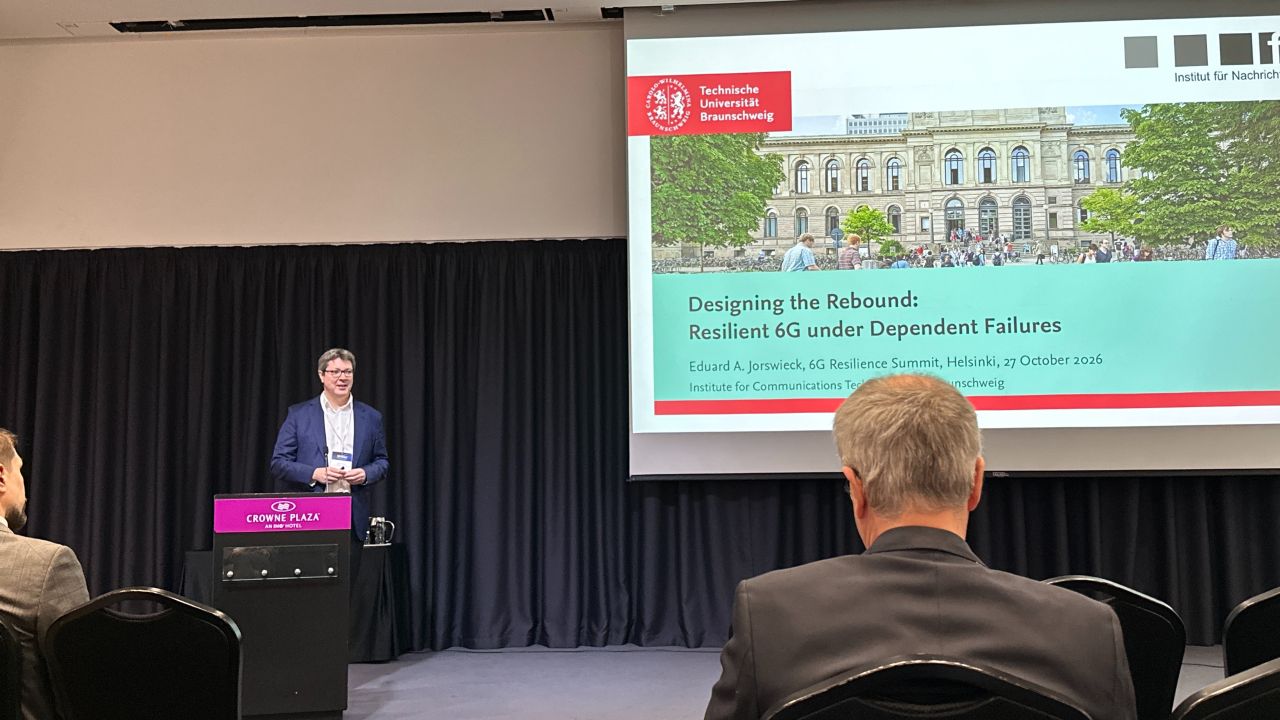
Prof. Jorswieck spoke about resilient 6G under dependent failures. Redundancy and resilience have a cost, and it belongs in the design calculation from the start, not bolted on afterwards. Dependencies matter a lot: two network paths that each fail 1% of the time can differ a hundredfold in outage risk, depending on whether they share power or backhaul.
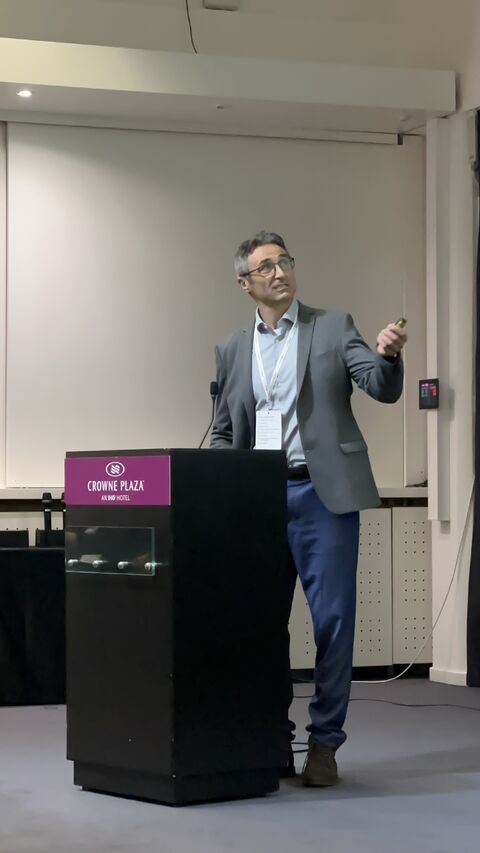
Prof. Sezgin pointed out that resilience is rarely measured the same way, which makes results hard to compare. His group proposes the adaptation gap: given the service you need, it records how far the network falls short over time, scored separately for absorption, adaptation, and recovery. He also presented reconfigurable intelligent surfaces, or "intelligent mirrors", which reflect a radio signal where it is needed.
Thank you to the organizers for a great summit!